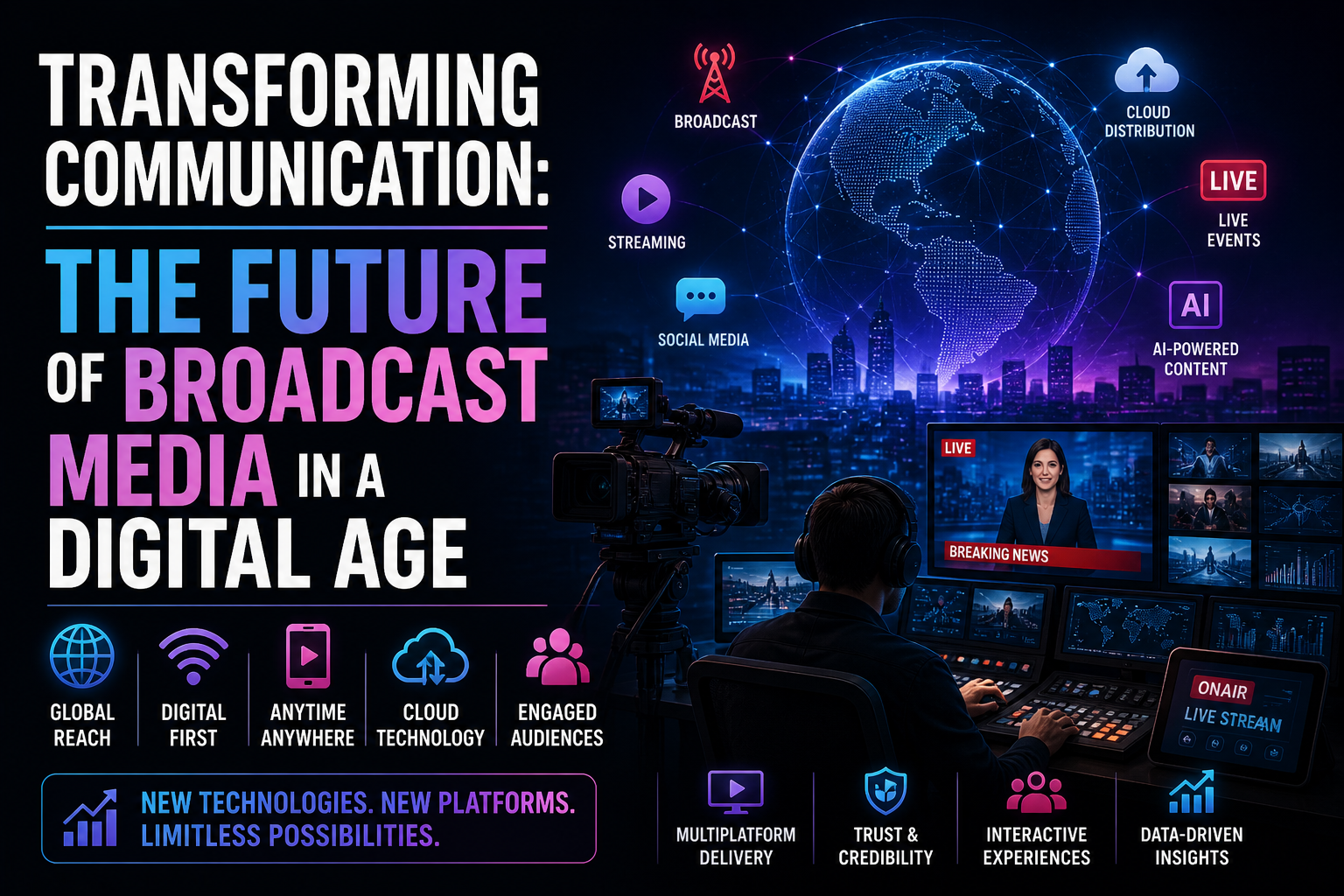

Broadcast media as we knew it—linear TV, scheduled radio shows, one-way communication—is dying. In its place rises a new era of interactive, on-demand, and personalized content. The future of broadcast media is not about reaching millions at once; it’s about connecting with each viewer individually.
Search Query: “Future of broadcast media trends 2026”
Key Trends Shaping the Future
1. From Linear to On-Demand
Nobody waits for a show to air at 8 PM anymore. Streaming services like Netflix, YouTube, and Disney+ have trained audiences to expect content whenever they want it. Traditional broadcasters are now launching their own on-demand platforms (e.g., BBC iPlayer, Hulu, Peacock). The winners will be those who offer the best content discovery and personalized recommendations.
2. AI-Powered Personalization
Artificial intelligence analyzes your viewing habits, watch time, and even your emotions (via camera or feedback) to suggest shows you’ll love. In 2026, some platforms use generative AI to create custom trailers or even alternative endings based on your preferences.
3. Interactive & Shoppable Content
The line between watching and doing is blurring. Live sports now allow you to choose camera angles. Reality shows let you vote for winners. News broadcasts offer clickable fact-checks. And shoppable videos let you buy products you see on screen with one click. This turns passive viewers into active participants.
4. 5G & Cloud Broadcasting
With 5G networks widespread, broadcasters no longer need expensive satellite trucks. A single journalist with a 5G smartphone can stream 4K video live from anywhere. Cloud-based production tools allow teams to edit, add graphics, and publish instantly from different locations.
5. Short-Form & Vertical Video
TikTok and Instagram Reels have changed attention spans. Even traditional broadcasters are cutting their content into short, vertical clips optimized for mobile. The future broadcast will be “snackable” – easily consumed on a bus, in a lunch break, or while waiting in line.
Search Query: “How 5G is changing TV broadcasting 2026”
What This Means for Advertisers & Creators
For Advertisers:
Mass-market TV ads are losing effectiveness. The future is targeted, interactive ads that match individual viewer interests. Think: a car ad that lets you change the color in real-time, or a fashion ad that lets you “try on” clothes via AR.
For Content Creators:
You no longer need a TV studio to reach millions. A smartphone, a good microphone, and a streaming platform are enough. The barriers to entry have collapsed. However, with more creators comes more competition. Authenticity and niche expertise will be your greatest assets.
Challenges Ahead
Despite the excitement, challenges remain:
- Information overload – Too many options can overwhelm viewers.
- Fake news & deepfakes – AI-generated content makes trust harder.
- Data privacy – Personalization requires collecting user data.
- Digital divide – Not everyone has high-speed internet.
Final Takeaway
The future of broadcast media is personal, interactive, and on-demand. Traditional broadcasters must adapt or become obsolete. For viewers, this means more choice and control than ever before.
Are you ready for the new era of media?
Search Query: “Will traditional TV survive the digital age”